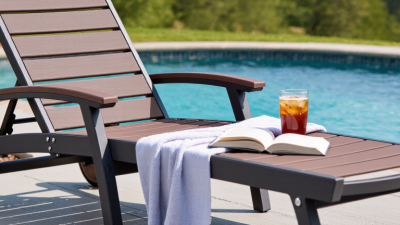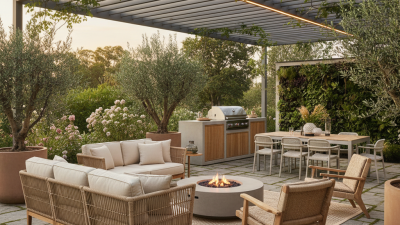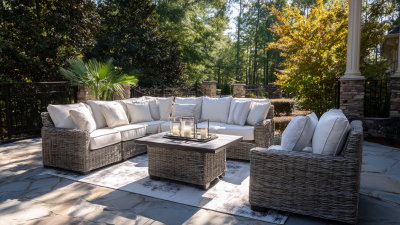
A Polywood Chaise Lounge is an outdoor reclining chair made with POLYWOOD lumber, a durable material commonly manufactured from recycled plastics. It is designed for patios, pool decks, and gardens, where rain, sun, and daily use can challenge ordinary furniture. The exact construction varies by model. Many designs have adjustable backs, wide armrests, and stainless-steel hardware. Some are sold without cushions, so check the product details before choosing one.
Furniture designer Charles Eames once said, “The details are not the details. They make the design.” His observation fits this lounger well: the hinge, footrest, and slat spacing shape both comfort and upkeep. Small choices matter. A sturdy frame may feel reassuring, but the chair can also be heavy to move. And while plastic lumber resists moisture, it is not maintenance-free; dust, sunscreen, and spilled drinks still leave marks. A quick rinse helps.
This guide explains what defines a Polywood Chaise Lounge, how its material differs from traditional wood, and what to consider before buying. We’ll look at recline settings, dimensions, cleaning, and placement near pools or exposed decks. Product claims can vary, so confirm the manufacturer’s specifications for the model you’re considering. That step is easy to overlook. Comfort is personal, too; a showroom impression may not match a long afternoon outdoors.
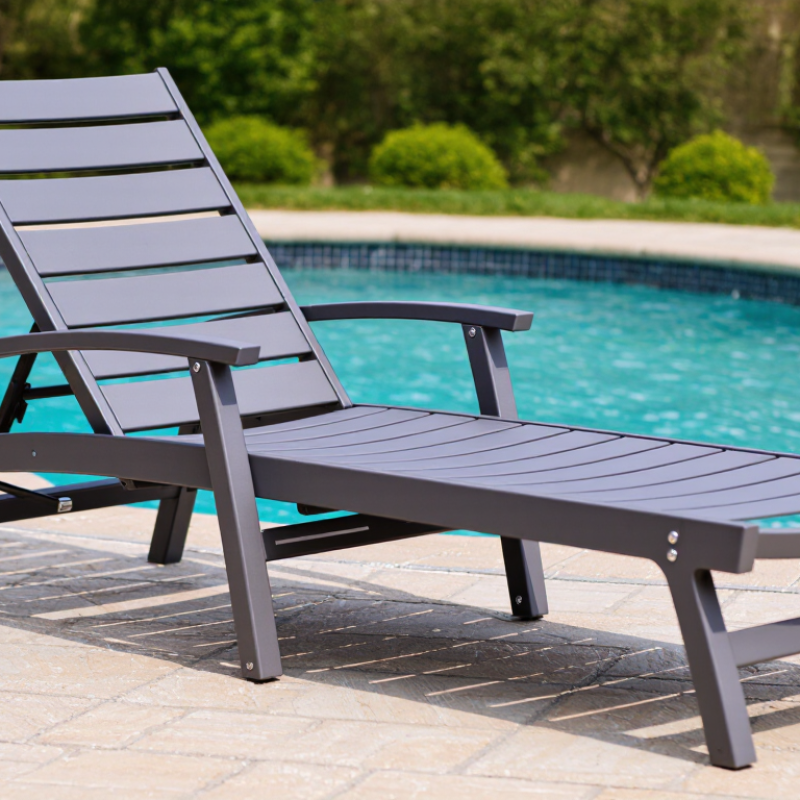
A polywood chaise lounge is an outdoor reclining chair made from plastic lumber rather than solid timber. In product listings, “polywood” may appear as a brand label or as loose shorthand for this material. The wording can be confusing. Check the product details to see what the frame is actually made from.
Many plastic-lumber chairs use high-density polyethylene, or HDPE. This durable plastic can come from recycled containers, though the recycled content varies by product. The material is shaped into thick boards, then assembled with corrosion-resistant hardware. Look closely at the edges and joints: they reveal more about construction than a color name does. A smooth surface also avoids splinters, but it can still collect dust, pollen, and water marks.
An HDPE chaise lounge is often heavy enough to stay put on a breezy patio. It does not need staining, but sunlight may gradually affect its color, depending on the formulation and exposure. Wipe it with mild soap and water; avoid assuming every cleaner is suitable. I’d check the care instructions before scrubbing. Recycled content sounds reassuring, yet it does not tell you the whole story: ask about material composition, hardware, and repair options before choosing a chair.
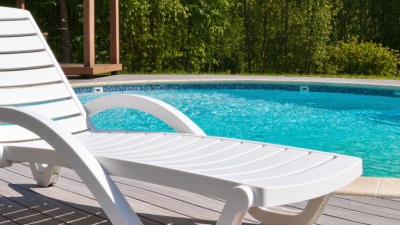
Material Profile: HDPE’s Typical Density of 0.941–0.965 g/cm³
A polywood chaise lounge is an outdoor reclining chair made with HDPE lumber, often formed into broad, solid-looking slats. HDPE’s typical density is 0.941–0.965 g/cm³, close to one gram per cubic centimeter. That number matters. It describes the plastic itself, not the finished chair’s weight or strength. Board thickness, frame design, fasteners, and additives also shape how the lounger feels and performs.
At this density, HDPE can feel substantial under everyday use. It absorbs little water, so rain generally won’t cause the swelling or splintering associated with untreated wood. But density alone cannot promise durability. Sun exposure may fade color, and unsupported boards can flex. I’d check the seat span, joints, and reclining hardware in person when possible; product specifications can be surprisingly incomplete.
Tips: Look for a stated material specification, not just “weatherproof.” Check that the chaise sits evenly, and clear grit from moving joints. Press gently on the center slats. If they bow noticeably, ask about support spacing or load guidance. That small check is easy to overlook.
A polywood chaise lounge is more than a molded seat. Its reclining backrest usually pivots through several positions, letting the user shift from upright reading to a flatter rest. Check that both sides move evenly and that the support locks without a sharp clunk. Small parts matter. A loose pin can make a solid-looking chair feel uncertain. Slats create the seat and back, allowing rain to pass through instead of pooling. Gaps should feel comfortable, not wide enough to catch a heel or pinch skin.
The frame carries weight from the slats into the legs, so joints and cross-braces deserve a close look. Stainless or coated hardware can help resist outdoor corrosion, though no finish is maintenance-free. ASTM D6662 sets performance requirements for polyolefin plastic-lumber decking; it is useful material context, not a chaise-lounge certification. The U.S. EPA’s 2018 Advancing Sustainable Materials Management report estimated that 35.7 million tons of plastic waste were generated in the United States, with 8.7% recycled. That figure does not measure chaise-lounge waste, but it is a reason to ask about repairable slats and replaceable hardware. I would not judge durability by weight alone. Examine the fasteners, flex the backrest gently, and look beneath the seat.
A polywood chaise lounge is commonly made from dense plastic lumber, often using recycled high-density polyethylene. Sunlight can gradually fade its color and alter the surface. ASTM D4329 provides a controlled way to examine plastics under fluorescent ultraviolet light. Test specimens experience specified UV and moisture cycles at controlled temperatures. The details matter.
D4329 is a testing practice, not a universal pass-or-fail rating. A lab may compare samples before and after exposure for color change, cracking, gloss, or changes in mechanical properties. For a chaise lounge, this can help assess whether its plastic slats retain their appearance and strength after UV stress. Small details count. Results depend on the selected test cycle, specimen preparation, and measurements.
The test does not reproduce every outdoor condition. It may not capture abrasion from sandy clothing, standing water, temperature swings, or stress around hardware. Nor can a set number of laboratory hours be translated neatly into years outdoors. That is useful, but incomplete. When comparing test data, look for the exact procedure and reported measurements, not just a claim of UV resistance. A shaded patio and a sun-baked deck can expose the same chair to very different conditions.
| Test Dimension | ASTM D4329 Reference or Measurement | Relevance to a Plastic-Lumber Chaise Lounge |
|---|---|---|
| Test purpose | ASTM D4329 is a practice for exposing plastics to fluorescent UV light and moisture in a laboratory weathering apparatus. | It helps compare changes in plastic specimens after controlled weathering; it does not by itself establish how many years a chaise lounge will last outdoors. |
| Material under consideration | Many plastic-lumber outdoor furniture products use high-density polyethylene (HDPE), sometimes with pigments, fillers, or stabilizers. Actual formulations vary. | Test samples should represent the material and color being evaluated. Results for one formulation or color should not automatically be applied to another. |
| UV source | Fluorescent UV lamps are used. UVA-340 lamps are commonly selected to approximate the short-wavelength UV portion of natural sunlight. | UV exposure can contribute to fading, surface changes, and loss of some mechanical properties. Lamp selection affects the exposure spectrum. |
| Moisture exposure | The practice includes specified moisture options, such as condensation and, where applicable, water spray. The selected procedure should be reported. | Moisture cycling adds a controlled wetting or condensation component, but does not reproduce every outdoor condition, such as dirt, salt, or freeze-thaw exposure. |
| Example exposure cycle | A commonly used cycle is 8 hours of UV exposure at 60°C followed by 4 hours of condensation at 50°C. Confirm the applicable ASTM D4329 edition and selected cycle before testing. | This is an example of a laboratory cycle, not a universal requirement or a direct conversion to outdoor service time. |
| Controls to report | Record the lamp type, cycle, irradiance or control method, black-panel or chamber temperature as applicable, moisture phase, total exposure time, and specimen details. | Reporting these details makes comparisons between materials and test programs more meaningful. |
| Color change | Measure color before and after exposure using a documented color-measurement method; color difference may be calculated using ASTM D2244. | Color change can indicate fading or other visible surface alteration. A color difference alone does not describe structural strength. |
| Gloss and surface appearance | Gloss can be measured using an appropriate method such as ASTM D523. Visual inspection can also document chalking, cracking, or surface changes. | These observations help assess appearance, but should be reported separately from mechanical-property results. |
| Mechanical-property retention | Compare exposed specimens with unexposed controls using a suitable method for the material and specimen, such as tensile testing under ASTM D638. | Retention of relevant properties can help assess material changes. A separate product-level evaluation is needed to assess the complete chaise, its joints, and its load capacity. |
| Pass/fail interpretation | ASTM D4329 describes an exposure practice; acceptance limits must be set by the product specification or test program. | There is no single ASTM D4329 pass/fail threshold that applies to every plastic chaise lounge. |
| Important limitation | Accelerated laboratory exposure is controlled and comparative. It does not reproduce every combination of natural sunlight, temperature, humidity, pollutants, and handling. | Use results as one part of material evaluation, alongside product-specific structural testing and outdoor-use requirements. |
Care and Selection: Cleaning, Weight Capacity, and Outdoor-Use Factors
A Polywood-style chaise lounge is usually made from high-density polyethylene lumber, not solid wood. For everyday cleaning, rinse off loose grit, then use mild soap, water, and a soft brush. Grit trapped beneath a cushion can leave fine scratches. Skip harsh solvents unless the maker specifically approves them. Small details matter.
Check the stated weight capacity before buying; there is no single safe limit for every chaise. ASTM F1561, a safety specification for plastic outdoor chairs, evaluates strength and stability, but it does not set one universal capacity for all lounge designs. Ask for the model’s rated limit and follow its instructions. A wider frame may look sturdier, but appearance alone proves little.
Tips: For outdoor use, consider full-sun exposure, standing water, and coastal air. HDPE resists moisture, but screws and other hardware can still corrode. Rinse salt and pollen from joints, and let the frame dry before covering it. ASTM G154 describes accelerated UV exposure testing for nonmetallic materials; it is a useful testing reference, not a guarantee of how long a lounge will retain its color outdoors. A covered spot helps, though moving a heavy chaise every day can get old.