Leave Your Message

Who Are the Top Wicker Patio Furniture Suppliers in China?

Choosing a supplier for Wicker Patio Furniture in China is not just a search for attractive catalog photos. A well-made set depends on details buyers can inspect: evenly wrapped wicker strands, smooth frame joints, secure fasteners, and cushions with clean, consistent stitching. Small defects matter. A loose weave may widen after use, while a poorly finished frame can affect both appearance and stability. China has manufacturers and trading companies with different strengths, so “top” should mean a reliable fit for a buyer’s product, order size, and quality needs—not simply a familiar name.

This guide explains how to compare potential suppliers using practical evidence. Look for clear factory information, product specifications, sample policies, production timelines, and responsive answers about materials and customization. Ask for close-up photos or a sample before making claims based on a polished showroom image. If possible, check how the supplier inspects frame alignment, weave consistency, and packaging before shipment. There is no perfect checklist. Supplier records can change, and a good sample does not guarantee every production batch will match. That part deserves scrutiny. The aim is to identify companies worth further verification, not to treat a list as an endorsement. Careful questions, written specifications, and realistic expectations can help buyers make a more informed decision.
Who Are the Top Wicker Patio Furniture Suppliers in China?

What Defines Wicker Patio Furniture: PE Rattan, Frames, and Weave Types

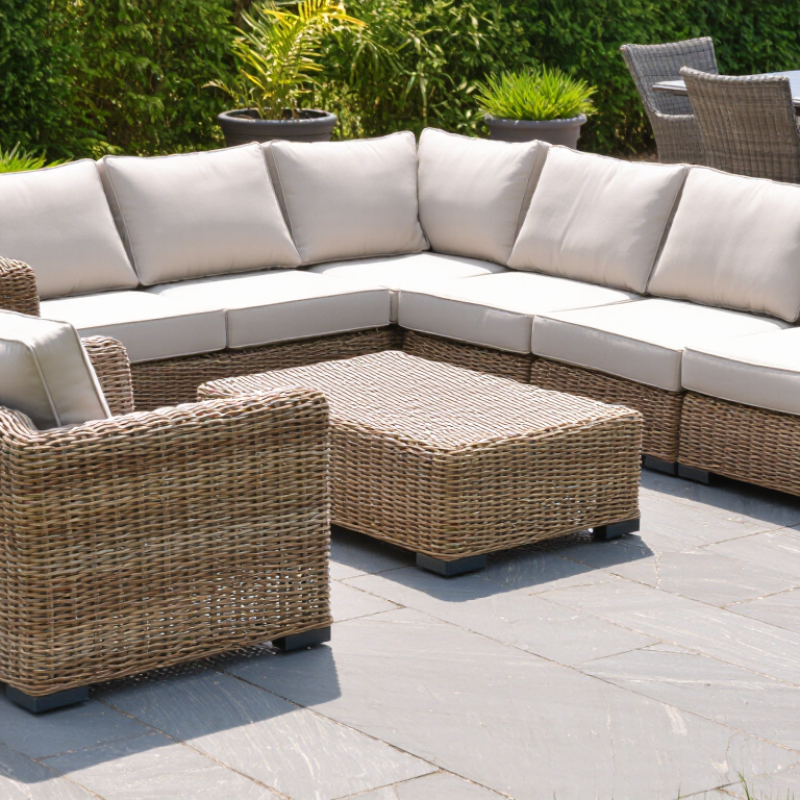
Wicker patio furniture is defined by more than its woven appearance. Most outdoor sets use PE rattan, a synthetic material formed into strips around a supporting frame. Quality varies with strip thickness, flexibility, and resistance to sunlight. Ask suppliers for material specifications and a physical sample. A sample helps. Check whether the strips bend smoothly, show even color, and have clean edges without splits.

The frame affects stability and service life. Aluminum is light and resists rust, while coated steel is heavier and can feel more rigid. Inspect welds, corners, and the finish around joints, where wear may appear first. Sit on a sample chair and notice any rocking or sharp movement. Small details matter.

Weave styles include flat, half-round, and round PE rattan. Flat strips create a neat, modern surface and are usually simple to wipe clean. Round strands add texture, while half-round profiles offer a middle ground. Tighter weaving is not automatically better; gaps can help water drain and make cleaning easier. Compare the underside and corners, not just the visible seat. Even a carefully made sample may differ from a later production batch, so ask how weave consistency is checked.

Which Chinese Supplier Models Serve OEM, ODM, and Ready-Stock Buyers?

China’s wicker patio-furniture suppliers commonly serve buyers through OEM, ODM, and ready-stock models. Grand View Research valued the global outdoor-furniture market at USD 50.91 billion in 2023. It projects 5.0% annual growth through 2030. Growing demand makes clear specifications more useful than broad catalog claims.

OEM suits buyers with established designs, material requirements, and packaging plans. They can specify frame dimensions, synthetic-rattan color, cushion fabric, and carton markings. ODM suppliers adapt existing designs, which can shorten development but limit customization. Ask for the sample’s frame gauge, weave pattern, and cushion measurements in writing. Small differences matter. Ready-stock orders can ship sooner, but available colors, quantities, and fabric options may change. Confirm that quoted inventory is physically checked, not just shown in a catalog.

The World Bank’s 2023 Logistics Performance Index ranked China 19th overall. This offers useful country-level context, not a guarantee of any factory’s delivery performance. Request a dated stock list, production lead-time breakdown, and packing photos before paying a deposit. A neat sample helps, but it may not reveal how a full container will look after handling. Check repeat-order consistency and replacement-part availability, too.

Who Are the Top Wicker Patio Furniture Suppliers in China?

Which Chinese supplier models serve OEM, ODM, and ready-stock buyers?

This chart compares the defining emphasis of three common sourcing models: OEM typically follows buyer-provided specifications, ODM typically includes supplier-led product development, and ready-stock sourcing focuses on pre-produced items. It describes model types, not individual suppliers or a market ranking; suppliers may offer a mix of these services.

How Do EN 581-1:2017 and EN 581-2:2015 Apply to Outdoor Seating?

For Chinese wicker patio furniture suppliers, EN 581-1:2017 and EN 581-2:2015 offer practical benchmarks for evaluating outdoor seating. Part 1 sets general safety requirements for outdoor furniture, including seating intended for camping, domestic, and contract use. Part 2 focuses on mechanical safety requirements and test methods for seating. They work together. One addresses general hazards; the other examines how a chair performs under specified tests.

For a wicker chair, assessment should cover the complete assembled product, not just the woven surface. Inspect the frame, joints, feet, edges, and moving parts for hazards such as instability or trapping points. Mechanical testing may examine strength, durability, and stability under defined loads. Test selection depends on the product’s intended use and the standard’s scope. A neat weave proves little about frame strength.

Ask suppliers for reports that identify the tested model, configuration, and applicable standard editions. Check that cushions or other components match the tested setup. A report for a similar chair may not represent the product you are buying. That distinction is easy to miss. Standards also do not replace production checks: materials, assembly, and quality can vary between batches. Verify the details, and be cautious about broad claims of compliance without supporting documentation.

How Can ISO 4892-2 Xenon-Arc Testing Assess PE Rattan Weathering?

For wicker patio furniture suppliers in China, ISO 4892-2 xenon-arc testing can help assess how polyethylene (PE) rattan responds to simulated sunlight and moisture. A xenon lamp reproduces key parts of daylight, while controlled heat, humidity, and water spray add weathering stress. The test is useful. It does not, however, predict an exact number of outdoor years.

A lab exposes prepared PE rattan samples under recorded conditions, including irradiance, temperature, and spray cycles. After exposure, technicians can compare color change, surface cracking, brittleness, and tensile strength with unexposed samples. Photographs and measured results make differences easier to review. Check that samples match the actual furniture material, including color and surface finish. A test on a smooth resin strip may not represent tightly woven strands.

When reviewing supplier data, ask for the test duration, cycle settings, specimen details, and before-and-after results. ISO 4892-2 describes exposure methods; it does not set one universal pass mark for every patio product. That distinction matters. Real outdoor performance also depends on shade, cleaning, assembly, and local climate. A lab report is useful evidence, not a guarantee. It is easy to overlook how much test choices shape the result, so compare reports only when their conditions are clear.

How to Compare Suppliers by Quality Control, MOQ, Lead Time, and Export Scope

Who Are the Top Wicker Patio Furniture Suppliers in China?

Comparing suppliers starts with evidence, not polished product photos. Ask how they inspect frame dimensions, welds, weaving tension, and color consistency. For outdoor pieces, request available UV and weather-resistance test records, plus details about the wicker material and frame finish. Compare a production sample with the approved sample; small differences can appear between batches. Small details matter. A clear inspection checklist is more useful than a general promise of “high quality.”

MOQ and lead time need the same careful review. Confirm whether minimum quantities apply per design, color, or full container, and ask how custom cushions affect the order. Request a schedule with sample approval, production, inspection, and packing dates. Seasonal demand can shift delivery estimates, so ask what happens if materials arrive late. A low MOQ may be convenient, but it does not automatically mean better value.

Tips: Ask for recent photos of packed orders and a written quality-control process. Check which export tasks the supplier handles, including export packing, shipping coordination, and document preparation. Clarify responsibilities before paying a deposit. One comparison can still miss a weak point: a supplier may have broad export experience but limited experience with your specific furniture construction. Probe that gap with direct questions.