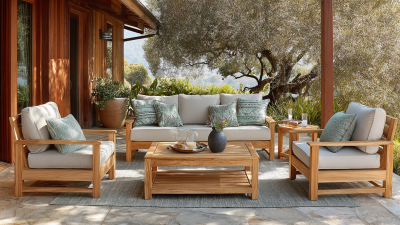
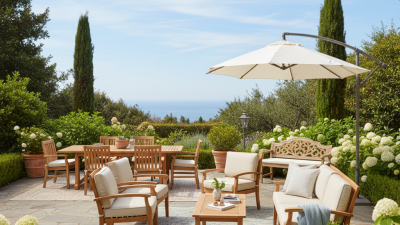
China Top 10 Teak Outdoor Furniture Manufacturers
Outdoor furniture faces sun, rain, damp mornings, and years of daily use. Teak Outdoor Furniture is valued for its warm color, distinctive grain, and natural oils, which help the wood withstand outdoor conditions. But the word “teak” alone does not guarantee lasting quality. Board grade, kiln drying, joinery, hardware, and finishing all affect how a table or chair performs.
This guide to China’s top 10 teak outdoor furniture manufacturers offers buyers a starting point for comparing suppliers. It considers product range, manufacturing capabilities, customization, quality-control practices, and communication—not simply attractive catalog photos. Look closely at details: smooth edges, consistent spacing between slats, sturdy mortise-and-tenon joints, and stainless-steel fittings can tell you more than a polished showroom image. Ask how the teak is sourced and dried, and request current product specifications, samples, and relevant documentation before placing an order.
Details matter.
A manufacturer that suits a hotel project may not fit a small garden retailer. Minimum order quantities, lead times, packaging, and after-sales support also deserve attention. Rankings can simplify a crowded market, but they cannot replace factory checks or clear written agreements. No list can settle every preference, and product information may change. Use these profiles to narrow your options, then verify the details that matter to your project.
What Defines China’s Teak Outdoor Furniture Manufacturing Sector
China’s teak outdoor-furniture sector is shaped by processing capacity, export experience, and access to imported timber. China is not a major source of plantation teak. The International Tropical Timber Organization’s 2017 report estimated more than six million hectares of planted teak worldwide, concentrated mainly in Asia. That figure describes plantations, not the volume of legally verified timber available to Chinese factories. Buyers still need to check species documents, origin records, and moisture specifications.
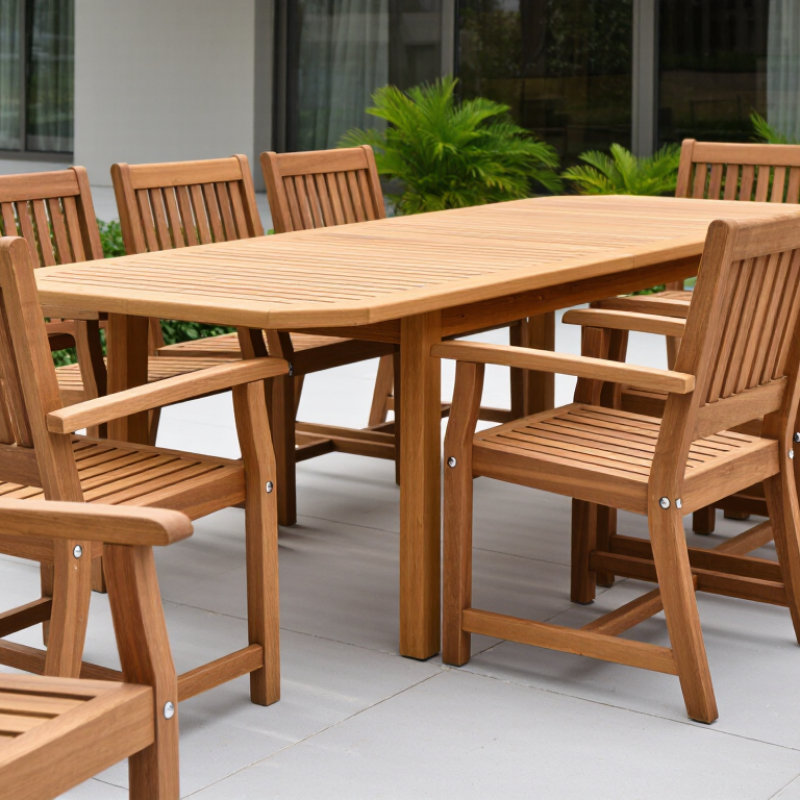
The wider furniture industry provides useful context, though it is not teak-specific. China’s National Bureau of Statistics reported operating revenue of 655.7 billion yuan for furniture manufacturers above designated size in 2023. This scale supports established capabilities in kiln drying, machining, and outdoor finishing. On a teak chair, details matter: tight mortise-and-tenon joints, drained seat rails, and corrosion-resistant fasteners can help withstand rain and repeated use. A smooth finish alone proves little.
Manufacturing quality varies. Teak’s natural oils may slow water absorption, but they do not prevent checking, loose joints, or poor hardware choices. Some factories can adjust dimensions and finishes for overseas orders; others rely on standard patterns. This is where buyers should ask for test pieces and written timber-traceability records. The paperwork is not always easy to compare, and that deserves more attention.
How Teak Is Selected and Processed for Outdoor Furniture
Teak selection starts with the board, not the finish. Buyers should check that the timber is identified as Tectona grandis and ask whether it comes from plantation or natural-forest sources. FAO’s 2015 Global Teak Resources and Market Assessment estimated 4.35 million hectares of planted teak worldwide in 2010, with most plantations in Asia. That figure gives useful context, but it does not verify any individual shipment. Traceable origin and consistent grading still matter.
For outdoor furniture, manufacturers typically favor heartwood, which has greater natural resistance to decay than the paler sapwood. They inspect boards for knots, end checks, uneven color, and grain that may twist during drying. Slow, controlled kiln drying helps limit movement after assembly; rushing it can leave hidden stress. Small details matter. The USDA Forest Products Laboratory’s Wood Handbook reports teak’s specific gravity at about 0.55, a useful reference for comparing weight and handling, though not a quality grade. After drying, careful machining and rounded edges help reduce splintering and water-trapping joints. No grading system removes every risk. Even well-selected teak can weather unevenly, and color matching is never perfect.
Criteria for Evaluating China’s Teak Furniture Manufacturers
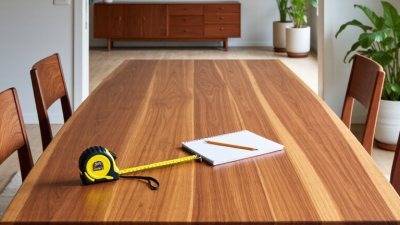
When comparing China’s teak outdoor furniture manufacturers, look beyond attractive showroom photographs. Ask whether the timber is solid teak, what grade is used, and whether sourcing documents are available. Teak naturally varies in color and grain; a small sample may not represent a full order. Request photos of completed sets and clear specifications for dimensions, frame thickness, and load capacity.
Check how the furniture is built. Tight, even joints and smooth edges can signal careful workmanship, while rough undersides may reveal rushed finishing. Ask about kiln-drying or other moisture-control steps, since poorly prepared wood can move as it adjusts to outdoor conditions.
Stainless-steel hardware is useful in damp settings, but confirm the exact material rather than relying on a vague description. Details matter. Also compare packaging, inspection procedures, replacement-part support, and realistic production timelines. A low quote is not always a good value.
Tips: Request a pre-shipment inspection with close-up photos of joints, finish, and hardware. Put agreed specifications in writing. Ask how the finish should be maintained, and whether the maker can supply matching parts later. One limitation: even careful checks cannot eliminate natural wood variation, so allow some differences in tone and grain.
Profiles of 10 Leading Teak Outdoor Furniture Manufacturers in China
China’s teak outdoor furniture sector includes factories with distinct strengths, not one universal production model. These ten profiles describe capabilities buyers can assess, rather than verified rankings. One manufacturer may specialize in kiln-dried timber and close moisture checks. Another may focus on compact dining sets for balconies. A third may offer made-to-order dimensions, while a fourth handles larger hospitality projects. Ask how each manages grain variation and outdoor finishing. Small details matter.
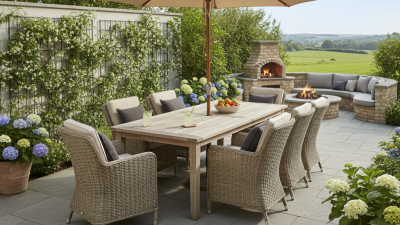
A fifth profile emphasizes solid joinery, with visible mortise-and-tenon connections on chair frames. A sixth combines teak with stainless-steel hardware, paying attention to drainage around fittings. A seventh produces folding pieces for easier storage. An eighth focuses on benches and long communal tables. A ninth offers mixed-material designs, such as teak paired with woven seating. The tenth may support small production runs and sample revisions. These are useful distinctions, but they do not guarantee consistent quality.
When reviewing any factory, request clear specifications for wood grade, moisture content, finish, and hardware. Ask for close-up images of joints and a sample exposed to ordinary outdoor conditions. Check whether the quoted lead time includes sanding, coating, and inspection. A polished showroom sample can hide uneven details. Teak naturally varies in color, and finishes weather differently. Not every manufacturer documents this well. That deserves a second look.
How the Manufacturers Compare in Products and Capabilities
Comparing China’s teak furniture makers is less about catalog size than how they turn timber into dependable outdoor pieces. Some focus on dining sets and folding chairs; others offer deep-seat sofas, loungers, and coordinated tables. Ask whether teak is kiln-dried, how moisture is checked, and whether boards are graded for color and grain. Details matter. Close-fitting joints, smooth undersides, and drainage gaps can reveal more than polished product photos. Finish options differ too: natural oil preserves a warm tone, while untreated teak weathers toward silver-gray.
Manufacturing capability shows in repeatability. Compare samples with production orders, inspect hardware for corrosion resistance, and request clear dimensional tolerances. A factory with in-house machining and finishing may control changes faster; a larger export operation may handle volume and packaging more consistently. Neither advantage guarantees better furniture.
Ask about replacement parts, custom sizing, carton protection, and defect records. If possible, test a chair on uneven paving and leave a tabletop outdoors through rain.
One weakness in many comparisons is relying on quoted capacity alone. It sounds convincing, but lead times and inspection records are more useful evidence.