Leave Your Message

How to Source Quality Outdoor Furniture Globally

Sourcing quality Outdoor Furniture globally requires more than comparing catalog prices. It requires careful judgment at every stage. A beautiful chair can fail after one wet season.

Richard Schultz, a pioneer in outdoor furniture design, once said, “Outdoor furniture has to live outside.” That simple statement remains a practical sourcing standard. Suppliers should prove how materials perform under sunlight, rain, salt air, and repeated use.

Look closely at the details. Ask for aluminum alloy specifications, powder-coating thickness, and corrosion-test results. For teak, confirm its grade, moisture content, and responsible supply chain. Examine welds, drainage holes, fasteners, fabric seams, and cushion recovery. A factory visit can reveal uneven stitching, poor storage, or rushed finishing that photographs hide.

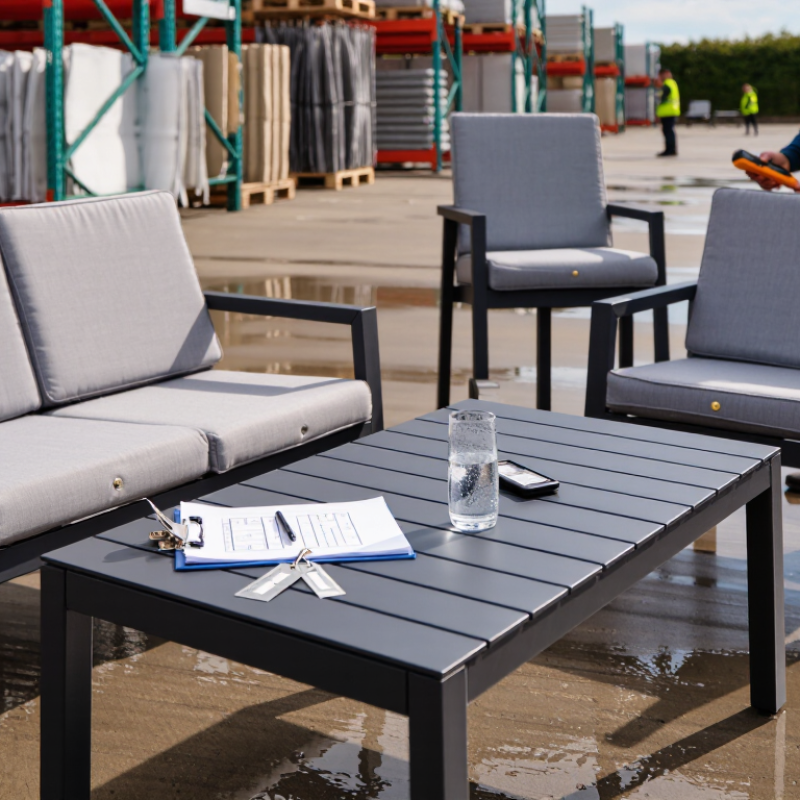
Request production samples before placing a large order. Leave them outdoors. Test the frames, open the mechanisms, and inspect water movement after heavy rain. Some mistakes become visible only after several weeks. That delay is frustrating, but it can prevent expensive returns.

Reliable sourcing also depends on factory capability. Review quality-control records, inspection procedures, packaging strength, and realistic lead times. Independent inspections can verify dimensions, finishes, labeling, and carton protection before shipment. Never rely on a supplier’s promises alone.

Cost still matters, but the lowest quotation may create higher replacement costs. Freight, spare parts, warranty handling, and seasonal demand can change the real price. Even experienced buyers misjudge these factors. A clear specification sheet, approved sample, and written quality agreement reduce confusion.

The strongest global sourcing strategy combines technical evidence with direct observation. It is not flawless. However, disciplined checks make Outdoor Furniture more durable, consistent, and commercially dependable.

How to Source Quality Outdoor Furniture Globally

Define Quality Standards for Outdoor Furniture

Quality in outdoor furniture begins with measurable standards, not attractive photographs. Define frame strength, fabric weight, coating thickness, and maximum load before contacting suppliers. For metal pieces, inspect welds, joint alignment, and corrosion resistance. For wood, check moisture content, surface cracking, and treatment consistency. Measure it. Do not rely on “premium” as a specification.

Request a production sample and examine it outdoors after repeated exposure. Test chairs with controlled weight, open and close moving parts, and pour water over cushions. Look for pooling, fading, loose stitching, and rust around hidden fasteners. Ask for test reports, material declarations, inspection records, and clear tolerance limits. Photos can hide uneven coatings. Samples often cannot.

A reliable sourcing process also checks whether factory standards remain stable between batches. Compare the approved sample with random cartons before shipment. Record dimensions, colors, hardware, packaging, and visible defects. Independent inspections can add useful evidence, especially across distant markets. Still, paperwork is not proof of perfect quality. I once treated a detailed report as enough and missed weak drainage in a cushion design. That mistake changed my checklist. Quality standards should be reviewed after field use, customer feedback, and seasonal weather. Leave room for revision.

Identify Reliable Global Sourcing Markets

Reliable global sourcing starts with market evidence, not attractive catalog photos. Grand View Research estimates the global outdoor furniture market reached about USD 48 billion in 2023. It forecasts roughly 5% annual growth through 2030. Demand is rising, but quality remains uneven.

China offers deep supplier networks, broad material access, and strong export experience. Vietnam is increasingly useful for wood, woven furniture, and mixed-material collections. Turkey can support shorter European replenishment routes. Poland and other Central European markets may reduce transit time for European buyers. ITC Trade Map data under HS 9403 helps compare export values, destination markets, and supplier concentration. Check several years, not one impressive figure.

Logistics can change the decision. The World Bank’s 2023 Logistics Performance Index scored China at 3.7, Vietnam at 3.3, and Turkey at 3.4 out of five. These scores are useful signals, not final answers. Visit factories when possible. Request recent testing records, moisture readings, coating specifications, and carton-drop results. A supplier with polished samples may still lack stable production controls. I have seen small details matter: uneven powder coating, loose webbing, and wet timber hidden inside sealed packaging. Cost comparisons should include inspection, rework, port delays, and replacement parts. The cheapest quote often becomes expensive later.

Evaluate Suppliers, Materials, and Production Capabilities

How to Source Quality Outdoor Furniture Globally

Reliable sourcing begins with evidence, not attractive catalogs. Evaluate each supplier’s factory history, export experience, and quality-control process. Ask for recent production photos, inspection records, and references from similar projects. A polished showroom can still hide weak assembly work. Request a live video tour when an in-person audit is impossible. Check whether the supplier measures moisture, coating thickness, weld strength, and packaging quality. These details reveal operational discipline.

Material selection must match the climate and intended use. Aluminum resists rust, but thin profiles may bend under pressure. Stainless steel performs well, yet its grade should be verified through mill certificates. Teak and other hardwoods require responsible sourcing documentation and controlled moisture levels. Outdoor fabrics should be tested for fading, water resistance, and seam strength. Production capability matters equally. Confirm whether the factory can maintain color consistency, manage custom dimensions, and replace defective parts efficiently. A low sample price means little if mass production varies.

Tips: Approve a detailed sample before placing a large order. Compare the sample with the approved specification, not memory. Use a third-party inspection before shipment when quality risks are high. Keep written records of tolerances, materials, finishes, and carton tests. One practical weakness is rushing decisions after a successful prototype. Production often exposes problems that the sample does not. Leave time for corrective work, even when deadlines feel urgent.

Verify Samples, Certifications, and Product Compliance

How to Source Quality Outdoor Furniture Globally

Outdoor furniture sourcing starts with a physical sample, not a polished catalog image. Check welds, drainage holes, coating thickness, fabric tension, and hardware alignment. Leave the sample outdoors for several weeks. Rain exposes weak joints quickly. Sunlight reveals fading that studio lighting hides.

Grand View Research estimated the global outdoor furniture market at more than USD 45 billion in 2023. This scale increases supplier choice, but it also increases verification risk. Ask for material specifications, factory inspection records, and batch traceability. For metal products, review corrosion testing such as ISO 9227 salt-spray testing. For textiles, request colorfastness and UV-resistance results. Certification alone is not enough. Verify the laboratory, test date, model number, and tested material. A certificate for similar furniture may not cover your actual design.

Tips: Compare the sample with the final production unit. Measure tube thickness, seat height, packaging strength, and component weight. Request photographs during production. Keep signed approval samples and inspection criteria. Independent pre-shipment inspection can catch missing fasteners or incorrect finishes. Local compliance matters too; confirm chemical restrictions, labeling rules, fire requirements, and packaging obligations in the destination market. Requirements differ by country and product type. I have seen suppliers provide accurate documents but inconsistent goods. That uncomfortable gap deserves attention. Do not approve a shipment because the paperwork looks complete. Re-test when the material, factory, or construction changes.

Manage Pricing, Logistics, and Ongoing Supplier Relationships

Sourcing quality outdoor furniture globally requires more than comparing factory quotes. I have learned to examine materials, construction, and communication together. Request samples with aluminum thickness, fabric composition, coating details, and weight clearly recorded. A low price means little if the frame bends or the finish fades quickly. My early forecasts were too confident. Seasonal demand changed faster than expected.

Pricing should include more than the unit cost. Calculate packaging, inspections, inland transport, freight, insurance, duties, and possible storage fees. Ask suppliers for tiered prices at realistic quantities. Confirm currency, payment milestones, replacement terms, and quotation validity in writing. A simple cost sheet can expose unexpected expenses, especially when carton sizes increase shipping volume. Keep a modest contingency allowance. Delays happen.

Logistics need a practical schedule, not an optimistic promise. Confirm production capacity before placing seasonal orders. Use pre-shipment inspections and photograph cartons, labels, and loading conditions. Protect cushions from moisture with sealed inner packaging, but check whether condensation remains trapped. That detail is easy to miss. For outdoor furniture, test packaging through handling simulations when possible. A damaged corner can create expensive returns and customer complaints.

Supplier relationships also require regular attention after delivery. Review defect rates, lead times, packaging performance, and communication quality every quarter. Share precise evidence, including photos, batch numbers, and inspection dates. Avoid changing specifications casually; small revisions can affect tooling and certification requirements. Pay agreed invoices on time, while documenting unresolved quality issues fairly. Trust grows through consistency, although it should never replace inspection. Keep alternatives available. A reliable partnership still needs measurable standards.

How to Source Quality Outdoor Furniture Globally - Manage Pricing, Logistics, and Ongoing Supplier Relationships

Sourcing Region Common Product Strengths Typical Materials Indicative FOB Unit Price (USD) Typical MOQ Production Lead Time Ocean Transit to Major Import Markets Main Cost or Quality Consideration Recommended Quality Controls
East and Southeast Asia High-volume collections, modular seating, dining sets, umbrellas, and mixed-material designs Powder-coated aluminum, synthetic wicker, teak, steel, olefin and polyester fabrics Dining chair: $18–$75
Two-seat sofa: $90–$260
Dining table: $80–$320
100–500 units per SKU 35–75 days after approved sample and deposit 18–40 days, excluding port congestion and customs clearance Competitive pricing, but container rates, fabric upgrades, and metal thickness can materially change landed cost Pre-production sample, coating thickness test, weld inspection, carton drop test, moisture check, and final random inspection
South Asia Handcrafted furniture, woven seating, solid wood pieces, and natural-fiber products Acacia, eucalyptus, teak, rattan, rope, cotton, and handwoven natural fibers Lounge chair: $45–$180
Two-seat sofa: $140–$420
Dining table: $150–$550
50–300 units per SKU 45–90 days, depending on handwork and timber availability 25–50 days to Europe, North America, or the Middle East Natural material variation is expected; kiln drying, fumigation, and legal timber documentation require close control Timber moisture test, joint-strength inspection, pest treatment records, color approval, and packaging review
Eastern Europe and Türkiye Upholstered seating, metal frames, wood furniture, and shorter regional replenishment runs Powder-coated steel, aluminum, pine, beech, synthetic rope, acrylic and polyester fabrics Dining chair: $35–$125
Two-seat sofa: $180–$520
Dining table: $180–$700
30–200 units per SKU 30–70 days 5–20 days by road or short-sea routes within nearby markets Higher labor costs than Asian alternatives, offset by lower inventory exposure and faster replenishment Frame alignment check, upholstery seam inspection, corrosion testing, dimensional inspection, and pallet stability test
Mediterranean Europe and North Africa Premium hospitality collections, outdoor dining furniture, ceramic surfaces, and design-led products Aluminum, stainless steel, ceramic, tempered glass, solid wood, acrylic fabrics Dining chair: $60–$220
Two-seat sofa: $250–$850
Dining table: $300–$1,200
20–150 units per SKU 35–80 days 3–18 days within Europe and nearby Mediterranean markets Premium finishing and compliance support may increase price but can reduce inspection and replenishment risk Surface-finish inspection, UV and corrosion documentation, glass safety check, load test, and packaging inspection
North and South America Regional production, contract furniture, quick replenishment, and oversized outdoor pieces Aluminum, steel, resin, treated wood, performance fabrics, recycled plastics Dining chair: $70–$260
Two-seat sofa: $300–$1,000
Dining table: $350–$1,500
20–100 units per SKU 25–70 days 1–15 days for regional distribution; 20–45 days for intercontinental ocean freight Higher factory and labor costs, but reduced transit distance may improve working-capital efficiency Load-bearing test, UV-resistance documentation, dimensional audit, packaging inspection, and regional compliance review
Cost and Logistics Management Benchmarks
Landed-Cost Structure Use a total-cost model rather than comparing factory prices alone Product cost commonly represents 45%–70% of landed cost Freight, insurance, duties, port charges, inspection, inland delivery, and warehousing can add 20%–55% Update the model by shipment, destination, container utilization, and tariff classification
Container Utilization Prioritize cubic efficiency because outdoor furniture is often bulky and lightweight Target 85%–95% usable container volume without exceeding carton compression limits Flat-pack designs can reduce shipping volume by approximately 20%–45%, depending on product structure Approve a loading plan and carton dimensions before final price confirmation
Payment and Commercial Terms Use milestone payments tied to measurable production events A common structure is 30% deposit and 70% balance after inspection and before release For new suppliers, consider retaining 5%–10% until critical documentation and defect resolution are complete Clearly define Incoterms, tolerance levels, late-delivery remedies, warranty coverage, and spare-parts obligations
Ongoing Supplier Relationship Build a quarterly scorecard covering cost, quality, delivery, responsiveness, and corrective actions Suggested weighting: quality 30%, delivery 25%, cost 20%, communication 15%, compliance 10% Review performance after every shipment and conduct a formal business review at least twice per year Use joint forecasting, approved change-control procedures, annual capacity checks, and documented corrective-action deadlines
Quality Acceptance Target Apply an agreed inspection standard before production begins For routine consumer furniture, an AQL plan such as 1.5 for critical defects and 2.5 for major defects is commonly used Set zero-tolerance rules for safety, structural, sharp-edge, and hazardous-material defects Keep approved golden samples, inspection photos, test reports, and signed corrective-action records for every SKU

Indicative benchmark ranges are for planning purposes only. Actual prices, lead times, freight costs, duties, and compliance requirements vary by specification, order volume, season, destination, and trade terms.