Leave Your Message

Top Polywood Patio Furniture Manufacturers Worldwide

Outdoor living has become a substantial global market, but choosing a manufacturer requires more than comparing catalog photos. Grand View Research estimated the outdoor furniture market at USD 50.73 billion in 2023 and projected growth through 2030. That expansion puts more attention on material quality, supply consistency, and long-term value. Polywood Patio Furniture is often considered for patios, pool decks, and coastal homes because recycled-plastic lumber can resist moisture and avoid the routine painting required by many wood products. Still, “low maintenance” does not mean maintenance-free.

This guide introduces leading manufacturers worldwide and the details buyers should verify before placing an order. Look for clear specifications on lumber composition, UV resistance, hardware, assembly, and warranty coverage. A chair that feels sturdy in a showroom may behave differently after years of sun, salt air, and temperature swings. Small details matter: rounded edges, drainage gaps, and stainless-steel fasteners can shape daily use. Manufacturer claims deserve scrutiny. A polished website is not independent proof of recycled content or durability. Ask for product documentation, and compare policies across brands. Some answers may remain unclear; that is worth noting, not smoothing over. The strongest supplier is not always the largest. It is the one that explains its materials, production standards, and after-sales support with evidence customers can check.
Top Polywood Patio Furniture Manufacturers Worldwide

What Polywood Patio Furniture Is and How It Is Made

Top Polywood Patio Furniture Manufacturers Worldwide

What Polywood Patio Furniture Is and How It Is Made

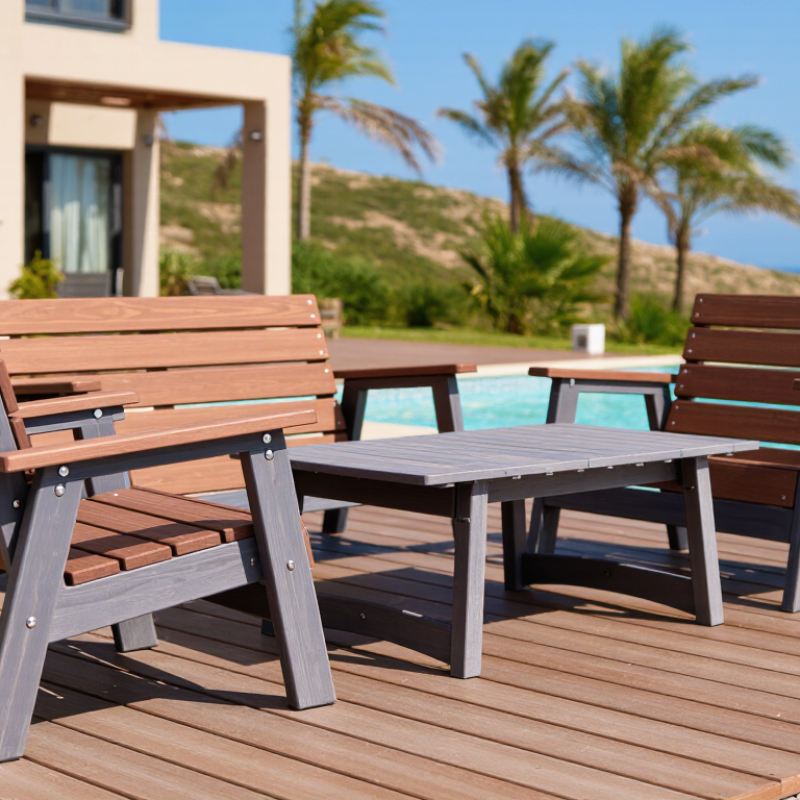
Polywood patio furniture is typically made from high-density polyethylene, often recovered from post-consumer plastics. Despite the name, it is not solid timber. Manufacturers sort and clean the plastic, then melt it with pigments and other additives. These can help the finished material resist fading and weathering, though performance varies by formulation. The mixture is shaped into boards or molded parts, cooled, cut, and drilled. A chair slat may show a subtle grain pattern, but that texture is usually pressed into the surface.

Finished parts are assembled with corrosion-resistant hardware, then inspected for fit and stability. Production details differ: some makers use recycled plastic, while others blend recycled and new material. That difference is worth checking rather than assuming. The furniture can be heavy, which helps it stay put on a breezy patio but makes rearranging less convenient. It also avoids routine painting, yet it is not maintenance-free; dirt can collect around joints. Color samples may look different outdoors, so inspect them in daylight when possible.


How to Assess Leading Polywood Furniture Manufacturers

Assessing a polywood patio furniture manufacturer starts with the material, not the catalog. Ask whether the lumber is recycled plastic, virgin plastic, or a blend, and request written specifications. Compare color consistency, board thickness, and surface finish across samples. Small differences matter. A tabletop that looks even under showroom lights may show uneven color in direct sun.

Look for clear evidence of outdoor testing. Useful records cover UV exposure, moisture, temperature changes, and load capacity. Ask how the manufacturer checks joints, fasteners, and chair stability during production. If possible, inspect a sample after repeated cleaning and a few days outdoors. That is not a full durability test, but it can reveal rough edges, water traps, or loose hardware. No checklist catches everything.

Reliable manufacturers should explain lead times, customization limits, replacement-part availability, and warranty terms in plain language. Check whether those details match the actual product specification, not just a sales sheet. Ask for production photos or a quality-control report tied to the furniture style you are considering. Be cautious when answers stay vague. A polished brochure is easy to make; consistent workmanship is harder to verify. Even a thorough review leaves some uncertainty, especially when samples come from a different production batch.

Major Polywood Patio Furniture Manufacturers Worldwide

Major manufacturers of recycled-plastic lumber patio furniture worldwide range from specialist outdoor-furniture factories to larger polymer-processing companies with dedicated furniture lines. Production is spread across North America, Europe, and Asia, though supplier capabilities vary widely. Some manufacturers make furniture from high-density polyethylene (HDPE) boards, often using recycled material; others handle design and assembly while sourcing the lumber elsewhere. That difference can affect lead times, customization, and consistency.

Look beyond catalog photos. Ask for material specifications, recycled-content documentation, and details about UV and corrosion testing. Check how boards are joined, whether fasteners resist rust, and how easily a damaged slat can be replaced. A sturdy sample should feel solid, with smooth edges and evenly spaced supports. Small details matter. For commercial buyers, request production capacity, packaging dimensions, and realistic shipping schedules before approving an order.

There is no dependable worldwide ranking based on public information alone. Factory size does not guarantee better joinery or longer service life, and recycled content can differ between product lines. I would compare written specifications with a physical sample, then clarify warranty exclusions in plain language. Even careful checks leave uncertainty; outdoor wear depends on climate, use, and maintenance.

Top Polywood Patio Furniture Manufacturers Worldwide - Major Polywood Patio Furniture Manufacturers Worldwide

A non-ranked industry overview of common manufacturing regions and capabilities. “Polywood” is often used informally for outdoor furniture made from plastic lumber, particularly high-density polyethylene (HDPE); it is not a single standardized material specification.

Manufacturing Region Common Product Categories Typical Materials and Construction Common Production Strengths Buyer Checks
United States and Canada Adirondack chairs, dining sets, benches, porch swings, and outdoor occasional tables HDPE plastic lumber, often made with recycled content; corrosion-resistant fasteners are commonly used for outdoor assemblies Outdoor-focused product ranges, made-to-order color options, and established domestic distribution channels Confirm recycled-content claims, UV-resistance details, warranty coverage, and whether the stated origin applies to the finished product or only some components
China Dining chairs and tables, loungers, benches, and export-oriented patio furniture collections Plastic lumber or molded plastic components; products may combine polymer parts with metal frames and hardware Broad supplier and component networks, varied order quantities, and experience serving international wholesale markets Request material specifications, independent test reports, production samples, and clear documentation of export packaging and quality-control procedures
Europe Garden seating, outdoor dining furniture, benches, and contemporary terrace collections Recycled or virgin polymer materials may be used; designs can also combine plastic components with metal or other outdoor-suitable materials Design-led collections and access to regional markets with established product-safety and environmental requirements Check applicable market compliance, material traceability, care instructions, and whether environmental claims are supported by documentation
Australia and New Zealand Outdoor chairs, dining furniture, benches, and products designed for residential and hospitality settings Weather-resistant polymer materials and outdoor-grade fittings; specifications vary by producer and product line Products and distribution tailored to outdoor living and regional climate conditions Verify UV and weathering performance for the intended location, local warranty service, and availability of replacement parts
International contract manufacturers Private-label seating, modular outdoor sets, commercial benches, and custom furniture programs Material mix, recycled content, dimensions, and hardware are generally specified by the buyer and project requirements Custom colors, dimensions, branding-free production, and larger project-based orders Use a written product specification covering resin type, recycled content, load capacity, finish, hardware grade, testing, and acceptable production tolerances

Regional Trends in Polywood Patio Furniture Production

Regional production of polywood patio furniture follows material supply, molding capacity, and nearby consumer markets. North American manufacturers often serve established outdoor-living markets, where thick recycled-plastic boards suit heavy chairs and long dining tables. Grand View Research valued the global outdoor furniture market at US$50.73 billion in 2023 and forecast 5.9% annual growth from 2024 to 2030. That category includes many materials, not just polywood, so it signals demand rather than polywood output. Small details matter. Color consistency can shift between batches when recycled feedstock varies, and buyers may notice the difference in a full patio set.

In Europe, circular-material requirements and design preferences encourage attention to recycled content, repairability, and restrained finishes. Asia-Pacific benefits from broad plastics-processing and furniture-making networks, though local feedstock quality and export costs vary widely. The OECD’s Global Plastics Outlook reports that the world generated 353 million tonnes of plastic waste in 2019, with only 9% ultimately recycled. That figure helps explain why reliable, traceable HDPE supply remains a practical constraint across regions. It does not measure furniture-grade material specifically. One useful caution: public market reports rarely separate polywood from other outdoor furniture, making regional production comparisons less precise than demand estimates.

How to Compare Manufacturers, Materials, and Product Ranges

Top Polywood Patio Furniture Manufacturers Worldwide

Comparing manufacturers starts with more than catalog photos. Ask how each company defines recycled plastic content, checks color consistency, and tests joints under repeated use. Request written specifications for board thickness, fasteners, weight limits, and warranty coverage. A sturdy-looking chair can still wobble on uneven paving. Small details matter. Compare lead times and replacement-part availability too, especially if you are furnishing a large deck.

Tips: Ask for a material sample and inspect its surface in direct sunlight. Look for clear care instructions and product dimensions. Compare dining sets, loungers, benches, and modular pieces by function, not just by price. Check whether cushions are included, and confirm how they are stored or replaced. I still find cushion details easy to overlook.

Material descriptions can sound similar, but performance depends on construction and finish. UV resistance, drainage, and corrosion-resistant hardware are useful points to verify. If possible, review a showroom piece or a detailed assembly guide before ordering. Manufacturers with precise answers make comparison easier, though no specification replaces real-world use. Keep a simple checklist, and note where information is missing.